
Rethinking the Value of Life Cycle Assessments

Manuel Ferreira de Almeida, Ph.D.
October 13, 2026
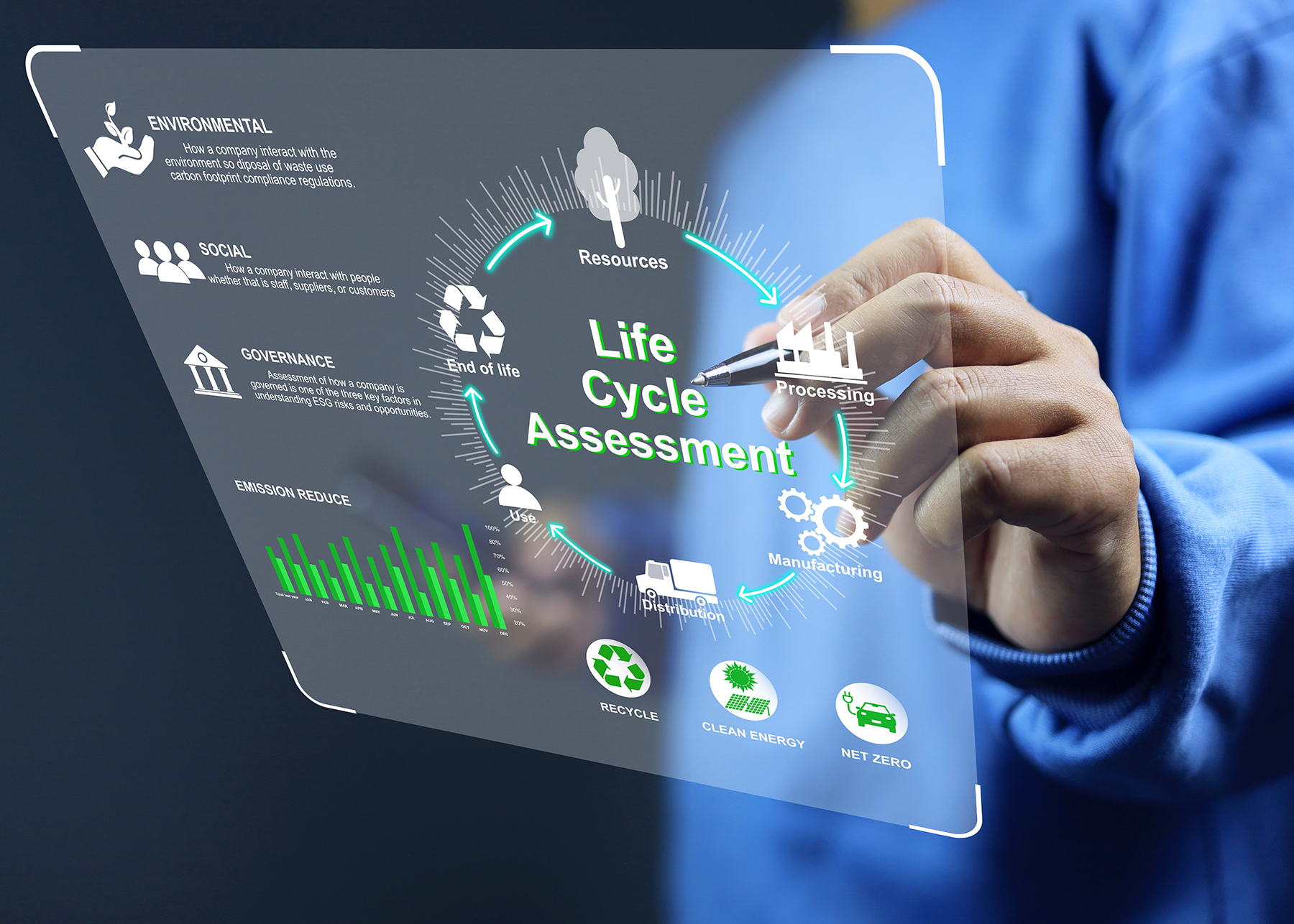
Life cycle assessment helps manufacturers quantify environmental consequences across a product's life. But an LCA that arrives after the important decisions have been made is akin to a weather forecast for yesterday. It may be accurate, but it is not particularly useful.
If engineering chose the material six months ago, procurement awarded the supplier contract three months ago, and the product is two weeks from launch, a beautiful 100-page assessment will not change much. The objective should not be to produce more LCAs; it should be to use LCAs to make better business decisions.
Not Every Data Gap Deserves to Be Fixed
The process of gathering sustainability data should be implemented with a level of rigor that can lead to actionable business decision-making. Start with what you know. Use credible secondary data when primary information is unavailable. Model the product and supply chain. Identify hotspots. Then ask: Where would better data actually change the decision?
Suppose one obscure component accounts for 0.1% of a product's environmental impact while another material accounts for 30%. You could spend months pursuing precise supplier data for the 0.1%. That effort may lead to better data, but probably not a better product.
Not every supplier, component, and missing data point should be treated as equally important. Find where the impact concentrates, then ask: Can we influence it?
Stop Optimizing Carbon in Isolation
Once environmental information becomes available, it is tempting to turn product development into a competition for the lowest carbon number. But products are not designed around one variable. Cost, technical performance, compliance, supply availability, risk, durability, and environmental performance all matter, and sometimes they conflict.
Sustainability is also broader than carbon. A product that reduces greenhouse gas emissions while creating a serious resource, toxicity, water, social, or end-of-life problem has not magically become sustainable.
Conditions, technologies, resource availability, regulation, and society change. The more useful question is whether we can make a more sustainable product given the choices available today.
The Best Time for LCA Is Before You Need It
Sustainability considerations frequently enter product development too late. A team develops a product. Engineering specifies it. Procurement builds the supply chain. Commercial teams prepare the launch. Then somebody asks, “What is its environmental footprint?”
At that point, sustainability has become an auditing function—measuring decisions rather than influencing them. Consider flipping the sequence. Utilize lifecycle information in the discovery phase to reveal new products or business models. During scoping, hotspot analysis can show where impacts concentrate.
With this approach, environmental performance can sit alongside cost, feasibility, opportunity, and risk. Engineers can compare materials and processes and procurement can evaluate supplier alternatives as development progresses. Teams can increase the analysis's sophistication as viable options narrow, and by launch, environmental information should no longer be a surprise.
This proactive approach can support credible customer conversations, regulatory disclosures, and environmental claims rather than trigger a frantic last-minute data exercise. An LCA stops being something you do to a product and becomes information you use to create the product.
The Future of LCA Is That Fewer People Will “Do LCA”
LCA expertise is not going away. As lifecycle information shapes more business decisions, credible methodologies, governance, high-quality data, and expert oversight become more important.
Automation, better data integration, and AI will accelerate this transition. We can model more products, evaluate more alternatives, and understand deeper supply chains than was possible when every assessment required extensive manual expert effort.
So, what happens when lifecycle intelligence becomes available for thousands or millions of decisions that previously had none? Perhaps it leads to integrating that intelligence into engineering, procurement, product development, and commercial decisions while there is still something to decide.
The value of an LCA is not the LCA itself. It is how that information can impact decisions and create better outcomes.
Manuel will be discussing this topic further at FORUM26! Don’t miss his session, “Turning LCA Insights into Business Decisions,” on Wednesday, Oct. 14, 2026, from 11:20 AM - 12:35 PM.

Sponsored Content
About the Author

Manuel Ferreira de Almeida, Ph.D.
Makersite
Manuel Ferreira de Almeida, Ph.D., serves as Head of North America at Makersite, driving the company’s go-to-market strategy and operations across the region. Based in Chicago, Manuel leads initiatives to expand market presence and accelerate growth by empowering manufacturers to make smarter, more sustainable product and supply chain decisions through advanced automation. Manuel holds a Ph.D. in genomics and has 20 years of experience in the enterprise sustainability software space.