

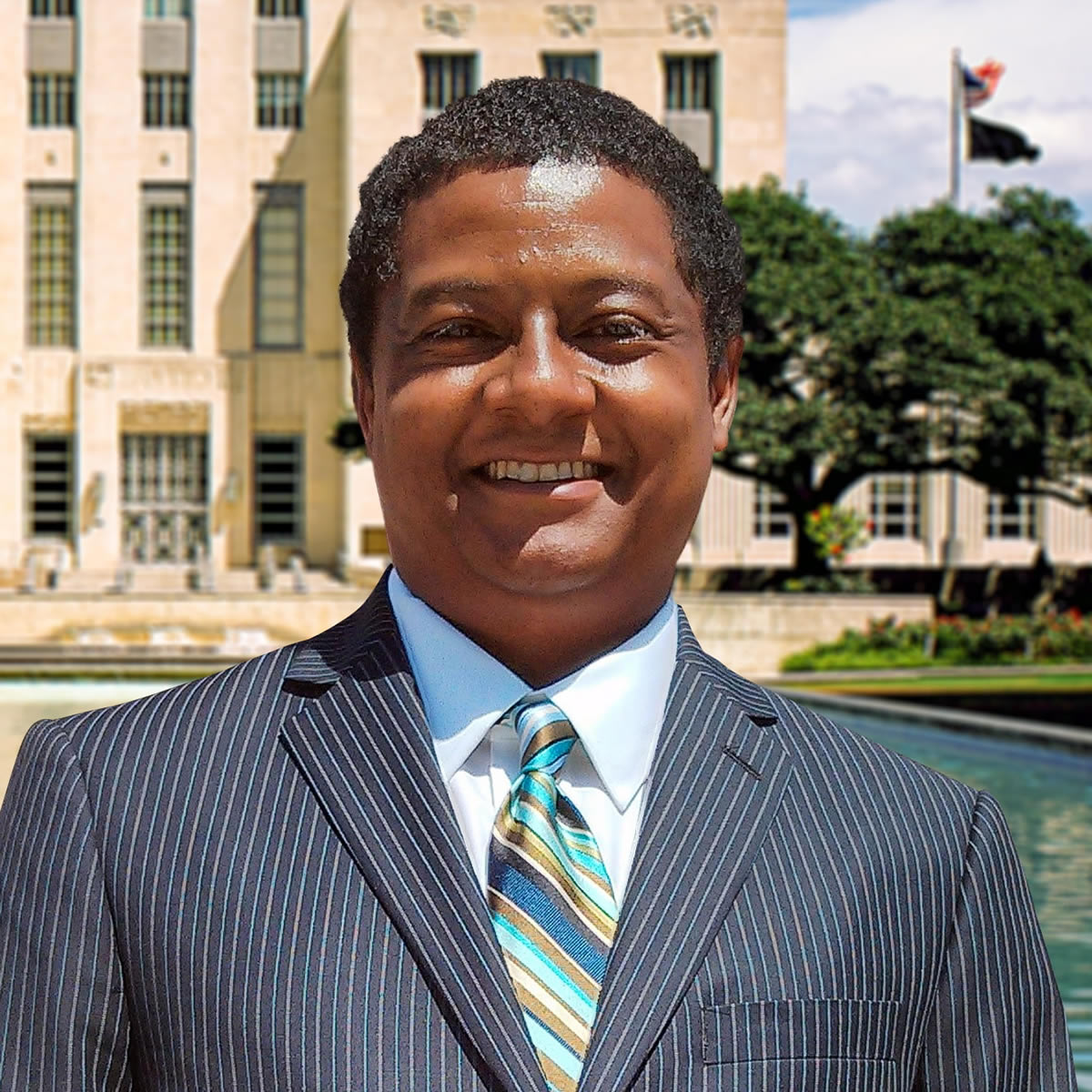
Dr. Steven Guillory
Lifetime Achievement Award NomineeNominated for: Lifetime Achievement Award
Title: Quality and Risk Manager
Company: City of Houston
Years in Profession: 21
Nominator: Dr. Steven Guillory, Quality and Risk Manager; City of Houston - Self
Title: Quality and Risk Manager
Company: City of Houston
Years in Profession: 21
Nominator: Dr. Steven Guillory, Quality and Risk Manager; City of Houston - Self
Provide an overview of the Nominee's 20-plus years of professional experience, including previous management positions held, current role, and key accomplishments. (500 word max.)*
Dr. Steven Guillory has spent 21 years in the environmental, health, and safety profession, beginning with an internship at Aggreko and a year as a Dangerous Goods Specialist at FedEx, followed by 19 years at the City of Houston, 20 in October 2026. He has held both centralized and departmental safety leadership roles within the City, and currently serves as Quality and Risk Manager. His signature accomplishment is Zero is Possible, known as ZIP, a citywide safety management system built on the ANSI and ASSP Z10 standard, which he designed and led from concept through sustained operation. Dr. Guillory holds a doctorate in safety sciences, and ZIP traces directly to his doctoral case study and dissertation research at Indiana University of Pennsylvania, one of the few instances where academic research was carried by its own author into full operational practice at municipal scale. He also holds an MBA and professional designations including Certified Risk Manager and Certified Insurance Counselor, and this year received two awards from ASSP recognizing his contributions to occupational safety and health.
Please list a minimum of two examples that demonstrate the Nominee's distinguished service and leadership within the fields of environment, health, safety, and/or sustainability at the corporate management level. Examples may include: Company or industry-related recognition and awards, board appointments, publications, public-speaking engagements, and relevant service or volunteer positions. (500 word max.)*
Dr. Guillory chairs the Certified Safety and Health Manager certification exam committee, leading exam blueprinting, item development, and maintenance of the exam item bank, work that shapes the credentialing standard for safety professionals nationally. He has served on committees and boards at both the national and Texas chapter levels of the Public Risk Management Association, and he co-founded the Texas Municipal Safety Group, a peer forum he built with a fellow safety manager to give municipal safety professionals across Texas a shared space for addressing the cultural and political obstacles common to public sector safety work. He has presented ZIP directly to the ANSI and ASSP Z10 Accredited Standards Committee, to City of Houston executive leadership including the Mayor and department directors, and through a national webinar and podcast appearance. He also served as peer reviewer on a manuscript concerning cardiovascular risk factors and BMI mobility among career firefighters, drawn from his own doctoral research, coordinating directly with the lead author to strengthen the work ahead of journal submission. This year he received two ASSP awards recognizing his contributions to the profession.
Identify and define the Nominee's impact on company performance. Outline pertinent EHS&S initiatives and/or programs. Provide measurement of impact through metrics or KPIs. (500 word max.)*
Before ZIP, the City of Houston's entire safety program consisted of a nine page policy document, and safety personnel were siloed by department, with several departments reporting outside the central safety function entirely. Dr. Guillory's implementation of ZIP became the direct catalyst for consolidating nearly all safety personnel under one unified structure, a consolidation City leadership had sought before this effort began but had never achieved. Impact was measured through leading indicators tied directly to program design: centralized training completion tracking across every department through a Talent Management System, tablet access extended to field employees for the first time, and monitored participation in a safety culture survey tied to a genuine recognition system. The clearest indicator of impact was a documented shift in incident reporting behavior, where employees who once avoided reporting injuries, near misses, and safety concerns began doing so openly, evidence of a transparent safety culture replacing a punitive one. The program was built almost entirely in house, training content, branding, and surveys, with minimal additional budget, delivering measurable culture change at low cost to taxpayers. ZIP has since been recognized by ASSP, and other government agencies and private sector organizations have reached out directly to Dr. Guillory for guidance in replicating the model.
Describe the Nominee's leadership style and provide examples of their commitment to expanding the influence of EHS&S professionals. (500 word max.)*
Dr. Guillory leads by listening before prescribing, and by extending ownership to the people closest to the work. ZIP's development began with one-on-one meetings with department directors, the HR Director, and the Mayor, gathering input before proposing any standard or solution, and departmental safety liaisons already trusted within their own teams were brought into the process early rather than handed a finished program. When internal resistance surfaced, including from within his own leadership chain, he addressed it through transparent data sharing and direct dialogue rather than mandate. His commitment to expanding the profession's influence extends well beyond his own organization: he chairs the national certification exam committee shaping how safety professionals are credentialed, he teaches safety management systems at Embry-Riddle Aeronautical University and Columbia Southern University, and he serves as a dissertation chair and committee member guiding doctoral candidates in safety and occupational health research through proposal development, methodology, and defense.
Provide two examples of Nominee's commitment to industry advancements or lifelong learning. Examples may include: Continuing education, corporate or university teaching, patents, strategic initiatives, breakthrough program development, and other definable actions. (500 word max.)*
The first example of Dr. Guillory's commitment to lifelong learning is the university teaching he has layered onto an already demanding career. He teaches safety management systems at Embry-Riddle Aeronautical University and Columbia Southern University, and business courses at University of the People, translating current practitioner experience directly into the classroom rather than relying solely on theory. That teaching runs alongside his own sustained formal education, a doctorate in safety sciences, an MBA, and professional designations including Certified Risk Manager and Certified Insurance Counselor, all pursued while working full time in an active safety leadership role.
The second example is ZIP itself as a case of breakthrough program development. The program originated as his own doctoral research and became the first known adoption of the ANSI and ASSP Z10 standard by a major U.S. municipality, a genuine advancement in how public sector safety management systems are built. Dr. Guillory has since extended that advancement beyond his own organization, supporting other government agencies and private sector organizations seeking to replicate the model.
The second example is ZIP itself as a case of breakthrough program development. The program originated as his own doctoral research and became the first known adoption of the ANSI and ASSP Z10 standard by a major U.S. municipality, a genuine advancement in how public sector safety management systems are built. Dr. Guillory has since extended that advancement beyond his own organization, supporting other government agencies and private sector organizations seeking to replicate the model.