
Best Practices for Implementing a Proactive Compliance Program: Part One of a Three-Part Series

Alan Johnson
November 16, 2017

Kristen Duda
November 16, 2017
How do you ensure your compliance programs are optimized and your business is well positioned to leverage its existing compliance efforts for broader, more strategic initiatives? Within this series of blog posts, we will outline essential best practices to help accelerate your efforts.
Best Practice: Focus on Culture – and Understand Potential Barriers
In his recent article “Is Organizational Culture Holding Back your EHSQ Performance?” LNS Research analyst Peter Bussey suggests that organizational silos often create a barrier for successful EHSQ program adoptions. He also highlighted research that pointed to the top challenges for performance improvement.
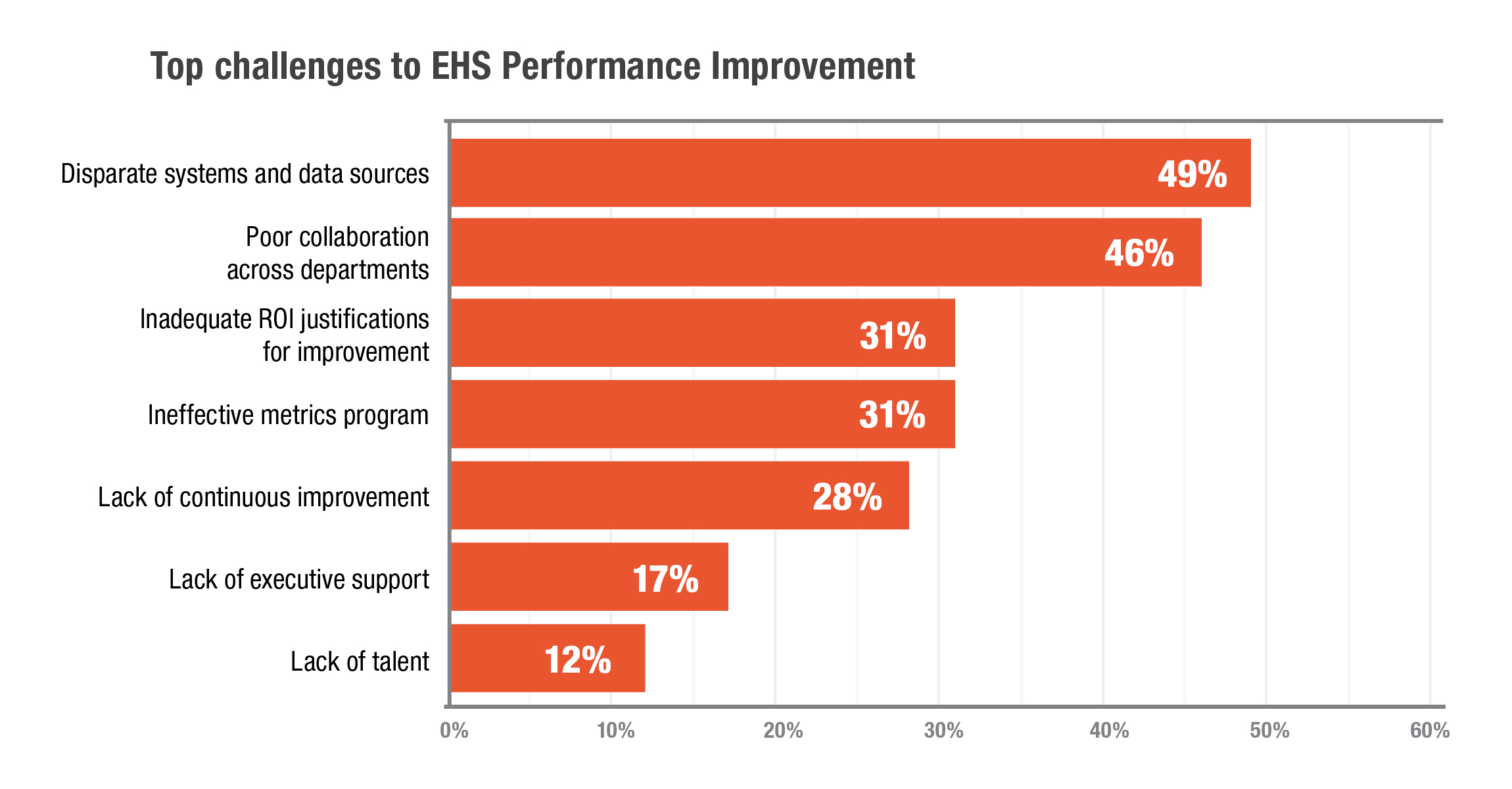
It is interesting to note that only one of these challenges, albeit the most significantly scored, is a technological hurdle. The rest of the issues are organizational and cultural in nature. So where do you begin to influence the business to rally around an elevated – more proactive – type of compliance?
The complexity of EHSQ change is compounded by the predisposition to focus on the “What” and the “How” of the project, and not nearly enough on the “Why” and “Who”. Having a deep understanding of your organization’s culture is imperative as you work to implement new strategies and initiatives. To help an organization be more proactive in their compliance and risk mitigation, these goals must be directly ingrained into the business culture.
A proper grasp of your company culture can also be a competitive advantage, driving visibility of your EHSQ program. According to a Katzenbach Center survey on organizational change, only 53% of businesspeople say culture is an important part of the leadership agenda at their company, while a mere 35% say their companies do an effective job of managing it. Clearly there is a strong case to be made for leading and influencing with a focus on company culture.
Best Practice: Get Influence from the Top
Change begins at the top is not only an old, familiar adage. When it comes to successful EHSQ compliance programs, beginning at the top to change and influence culture is a must. Program or systemic change must be sponsored by many well-aligned executives, with the support of the CEO. Buy-in and organizational support suffers when cross-functional managers fail to understand EHSQ initiatives.
Effective communication at the C-level about ongoing EHSQ compliance programs is a key to success in influencing adoption. Deloitte believes that there are 9 key elements of an effective, disciplined communications program at the C-level which lead to influence including:
- Aligning communications to priorities
- Defining critical audiences
- Defining audience-specific objectives around each priority
- Defining critical messages
- Packaging your messages
Additionally, Deloitte suggests that the packaging of the message must be as good as the content. The package ought to include:
- Thinking though who will deliver the message
- Selecting channels for communication
- Defining communication frequency
- Seeking feedback and evaluate your communications.
Taking it a step further, executives must not only talk the talk, but walk it by showing genuine behavioral support for the program. To consistently support the change, executives need to move beyond the nonverbal and live the change for all to see. It is one thing to support a compliance program by understanding the business risk and how it could potentially affect the bottom line. It is far more effective to demonstrate to internal employees, shareholders, and customers that compliance is a priority and that you are proactively making focused, necessary changes to support it. It is important to demonstrate through action that you support mitigating the risks of non-compliance with planning and forethought. Being proactive is a key element of a successful intelligent compliance strategy.
In our next post, we will outline how the best practices of Organizational Involvement and Emotional Buy-in can contribute to a proactive compliance program. In the meantime, drop us a line in the comments if you have any questions on what we’ve shared in the post above.

About the Author

Alan Johnson
3E
Alan leads the strategic vision and execution of 3E’s global chemical and workplace safety product portfolio, ensuring leadership in the space. He is responsible for driving product innovation, expanding market reach, and aligning with regulatory requirements, all while delivering exceptional value to 3E’s clients worldwide.

Kristen Duda
Intelex
Kristen brings more than 14 years of experience in environmental, health and safety management consulting to Intelex. As a professional engineer, she has hands-on experience implementing environmental compliance programs and strategies for large, multinational manufacturing corporations and defense agencies. Most recently, she served as Vice President with CH2M, a global engineering and consulting firm. While at CH2M, Kristen was responsible for spearheading highly successful environmental sales strategies, which led to double digit growth in the EHS consulting and information management practices, as well as industrial market verticals.
Kristen holds a Bachelor's degree in Chemical Engineering from the University of Illinois at Urbana-Champaign.
Kristen holds a Bachelor's degree in Chemical Engineering from the University of Illinois at Urbana-Champaign.